How to Drive Long-Term Engagement with Your Content: SEO Tips for Business Owners

November 3, 2024

How Do I Increase Engagement On My Content?
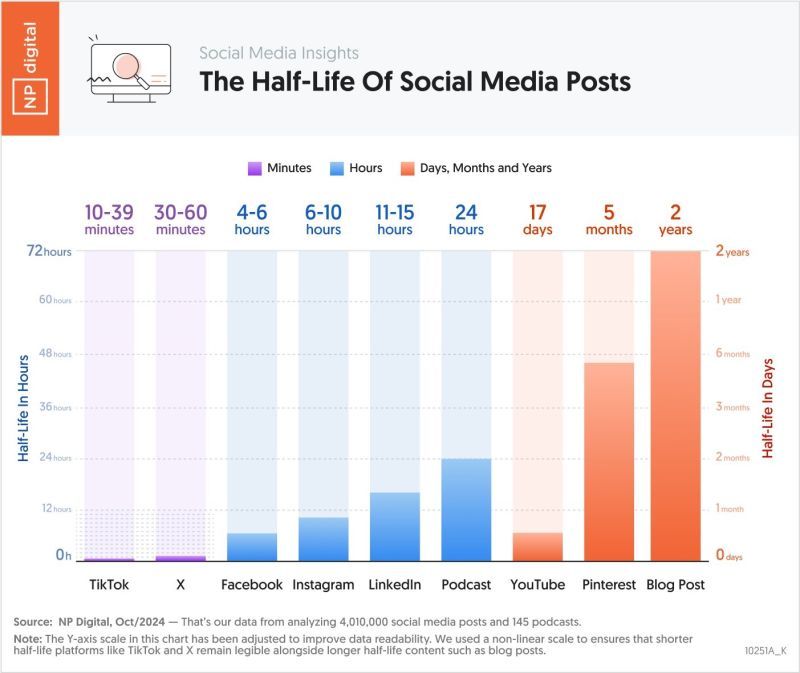
A graph showing the half life of social media posts

In the world of SEO, driving long-term engagement with content is essential to maintaining visibility, generating leads, and building authority in your field. But with an ever-increasing amount of online content, many business owners wonder, How can my content stay relevant over time?


This blog post covers strategies for creating evergreen content, optimizing for ongoing engagement, and leveraging SEO best practices to ensure that your efforts pay off month after month.


Credit to Neil Patel for the graphic an analysis that inspired this post.


1. Understanding Content Longevity in SEO


Content longevity refers to how long your content continues to generate engagement, views, and conversions after it’s published. For business owners, content with longevity means steady traffic from search engines and greater chances to turn that traffic into leads.


Why Longevity Matters:


• Consistent traffic keeps your website active in search engine rankings.

• Engagement metrics, such as time on page and click-through rates, improve your SEO ranking, making your content more discoverable.

• Evergreen content reduces the need for frequent, costly updates.


Relevant Long-Tail Keywords:


• “How to create evergreen content for SEO”

• “Best content strategies for long-term engagement”

• “SEO content optimization tips for business growth”


2. Crafting Evergreen Content for Maximum Reach


What Is Evergreen Content?

Evergreen content stays relevant regardless of trends or time, continuing to attract readers months or years after publication. Types of evergreen content include how-to guides, glossaries, and industry insights.


Tips for Creating Evergreen Content:


1. Choose Timeless Topics: Focus on foundational industry concepts, FAQs, and problem-solving content.

2. Optimize for SEO with Long-Tail Keywords: Use keywords that are popular and specific, such as “how to optimize website loading speed” or “content marketing for small businesses.”

3. Keep It Updated: Refresh your evergreen content periodically by updating stats, linking to new sources, or adding recent case studies to maintain relevance.


Relevant Long-Tail Keywords:


• “How to write evergreen content for SEO”

• “Evergreen content strategies for business websites”

• “Examples of effective evergreen content”


3. Optimizing Content for Search Intent


Understanding search intent—the reason behind a user’s query—is critical to attracting long-lasting engagement. By aligning your content with the user’s intent, you make your website the go-to resource for your target audience.


Types of Search Intent:


• Informational: Users looking for answers (e.g., “how to manage social media for small business”)

• Navigational: Users trying to find a specific page or resource

• Transactional: Users ready to buy (e.g., “best CRM tools for small businesses”)


4. Maximizing Engagement with User-Friendly SEO Practices


A well-optimized, engaging content strategy doesn’t just rely on keywords but on usability and quality. User experience (UX) factors such as page load speed, layout, and mobile responsiveness directly influence engagement and SEO rankings.


Tips to Improve User Experience:


1. Boost Page Speed: Use tools like Google PageSpeed Insights to optimize your site.

2. Make Content Skimmable: Use subheadings, bullet points, and images to break up long blocks of text.

3. Focus on Mobile Optimization: As mobile browsing grows, ensure your site is responsive and visually appealing on smaller screens.


Relevant Long-Tail Keywords:


• “Best SEO practices for user engagement”

• “How to improve mobile SEO for business websites”

• “Optimizing website speed for better SEO”


5. Leveraging Data-Driven Content Strategy


Content that provides unique data, analysis, or statistics often sees sustained engagement. Users and websites frequently link to data-driven content as a credible source, which boosts SEO through backlinks.


Examples of Data-Driven Content:


• Original research, such as surveys or case studies

• Industry benchmarks and trend reports

• Comparative analyses and detailed breakdowns


Data-driven content becomes an asset in your SEO strategy, building trust and domain authority as users engage with and share your insights.


6. Utilizing Social Media to Drive SEO Engagement


Social media boosts visibility and drives traffic to your site, which can prolong content engagement. Consider repurposing your best content across platforms like LinkedIn, Instagram, and Twitter.


Strategies for Social Media Engagement:


• Share Visual Content: Graphics, infographics, and videos tend to gain more engagement.

• Leverage Hashtags: Use relevant industry hashtags to boost content discoverability.

• Invite Interaction: Create polls, pose questions, and encourage sharing to increase reach.


Relevant Long-Tail Keywords:


• “Using social media to boost SEO engagement”

• “How to repurpose content for LinkedIn

• “Content promotion strategies for small businesses”


7. Measuring and Analyzing Content Performance


Tracking your content’s performance over time provides insights into what resonates with your audience, allowing you to refine your strategy. Key metrics include:


• Bounce Rate: Indicates the percentage of users who leave after viewing only one page.

• Time on Page: Reflects the duration of user engagement.

• Conversion Rate: Shows how well content generates leads or sales.


Use tools like Google Analytics and SEMrush to monitor these metrics and fine-tune your content for maximum impact.


Relevant Long-Tail Keywords:


• “How to track content engagement for SEO”

• “Best tools for analyzing SEO performance”

• “Understanding content metrics for business growth”


Conclusion: Turning Content into a Long-Term SEO Asset


For business owners looking to build a sustainable digital presence, creating long-lasting, engaging content is essential. By focusing on user intent, improving user experience, leveraging social media, and continuously measuring performance, you can ensure that your content remains valuable, visible, and impactful over time.


Invest in content that not only meets today’s SEO standards but is also resilient against future algorithm changes. Need help optimizing your content for engagement and longevity?


Contact Pro Growe to learn more about our SEO services and start building a strategy that works!
This Facebook widget is no longer supported.
google reviews
By Gary Mackay March 30, 2026
At Pro Growe, we help businesses across the country build compliant, high-performing local SEO strategies — from GBP optimization to full digital marketing campaigns. If you're ready to grow your review count and your rankings, let's talk.
google business profile chekclist
By Gary Mackay March 30, 2026
At Pro Growe, we help businesses across the country — from Dallas storefronts to nationwide service providers — build GBP profiles that rank, convert, and grow. If you'd like a free audit of your current profile, reach out to our team today.
By Gary Mackay January 31, 2026
Learn how homeowners decide who to trust before calling—and how local service businesses can build credibility online with SEO, reviews, and trust signals.
google maps
By Gary Mackay January 31, 2026
Discover why Google Maps delivers the highest-quality leads for plumbing and HVAC companies—and how to optimize your local presence to win more calls.
November 29, 2025
Why Your Plumbing SEO and HVAC SEO Strategy Isn’t Turning Website Traffic Into Calls
November 26, 2025
How These Five Tools Can Streamline Scheduling, Dispatching, and Customer Service
February 26, 2025
Local SEO for Landscapers: Affordable Solutions for Big Results
February 19, 2025
How Digital Marketing and Sales Work Together to Increase Leads and Revenue ๏ปฟ If you want your business to grow, you need more than just a good product—you need a way to reach the right customers and turn them into loyal buyers. That’s where digital marketing and sales come in. Digital marketing helps you attract potential customers online, while sales strategies turn those leads into paying clients. When these two work together, your business doesn’t just survive—it thrives. In this guide, we’ll break down how digital marketing and sales work hand in hand , the best strategies to use, and how to boost your revenue with smart online marketing techniques . Key Takeaways • Digital marketing and sales are essential for business growth. • Aligning your marketing and sales efforts increases revenue. • Social media is one of the best ways to engage customers. • Using data helps you personalize customer experiences and improve sales. • Future trends include AI-driven marketing and ethical branding strategies . What is Digital Marketing & Sales? Digital marketing is how businesses attract and connect with customers online . This includes: โœ” SEO (Search Engine Optimization) – So your website shows up on Google when customers search for your services. โœ” Social Media Marketing – Engaging potential customers on platforms like Facebook, Instagram, and LinkedIn . โœ” Email Marketing – Sending personalized emails to nurture leads. โœ” Paid Advertising – Running targeted ads on Google Ads or Facebook Ads . โœ” Content Marketing – Creating blogs, videos, and guides to build trust with potential customers. Sales is the process of turning those marketing efforts into actual purchases . The goal is to guide potential buyers through their decision-making process and convince them that your product or service is the best solution for their needs. ๐Ÿš€ When marketing and sales teams align, businesses grow faster, close more deals, and build long-term customer relationships. How Digital Marketing Has Changed Over Time Remember when pop-up ads were everywhere? Or when businesses only relied on print ads and billboards? Those days are gone. Modern digital marketing is all about personalized experiences. • Customers expect businesses to understand their needs and offer relevant content. • Social media has made it easier than ever for businesses to interact with customers in real time . • Data analytics allows companies to track customer behavior and optimize their marketing strategies. Example: A local pressure washing company that invests in SEO and Google Ads will get more online leads than one that still relies only on flyers or word-of-mouth. โžก๏ธ Read more: Why Local SEO is Essential for Service-Based Businesses How to Align Your Marketing & Sales for Maximum Impact If your marketing and sales teams don’t communicate, you’re missing out on potential revenue. Here’s how to get them working together: 1. Set Shared Goals Marketing and sales should aim for the same outcome— turning leads into customers . Define clear goals like: โœ” Increasing website traffic by 50% in 6 months. โœ” Boosting conversion rates by 10%. โœ” Growing social media engagement to increase brand trust. 2. Use the Right Technology Technology bridges the gap between marketing and sales by keeping customer information organized and tracking performance in real-time . โœ” CRM Software (like HubSpot or Salesforce ) helps track customer interactions. โœ” Marketing automation tools (like Mailchimp or ActiveCampaign ) make it easy to follow up with leads. 3. Create a Smooth Customer Journey Customers should have a consistent experience from the first ad they see to their final purchase. โœ” Use retargeting ads to bring back website visitors. โœ” Send personalized follow-up emails to nurture leads. โœ” Provide excellent customer support so buyers feel valued. How Social Media Helps Businesses Sell More Social media isn’t just for entertainment—it’s a powerful sales tool when used correctly. Choosing the Best Platforms โœ” Facebook & Instagram – Great for local businesses, home services, and eCommerce. โœ” LinkedIn – Best for B2B businesses and professional services. โœ” TikTok & YouTube – Ideal for video marketing and brand awareness. ๐Ÿ’ก Example: A landscaping company that posts before-and-after photos on Instagram and runs Facebook ads will attract more customers than one that only relies on word-of-mouth. Creating Engaging Social Media Content โœ” Videos & Reels – Show off your products or services in action. โœ” Behind-the-scenes posts – Build brand trust. โœ” Customer testimonials – Show social proof to build credibility. โžก๏ธ Need help with social media marketing? Check out Social Media Strategies for Small Businesses . The Power of Data-Driven Marketing Want better results? Start tracking your data. • Google Analytics helps you see where your traffic comes from. • Facebook Pixel tracks conversions from your ads. • Heatmaps (like Hotjar) show how visitors interact with your site. By analyzing customer data, you can: โœ” Improve your SEO by knowing which keywords drive the most traffic. โœ” Send personalized email campaigns that convert. โœ” Optimize your ads for higher ROI. ๐Ÿš€ Using data helps you spend less while getting better results. Common Digital Marketing Challenges & How to Solve Them 1. Changing SEO Algorithms Problem: Google updates its algorithm frequently, affecting rankings. โœ… Solution: Keep your website optimized with high-quality content and natural backlinks from authority sites (Moz & Ahrefs). 2. Standing Out in a Crowded Market Problem: Everyone is advertising online, making it hard to compete. โœ… Solution: Focus on long-tail keywords and niche marketing to reach the right audience. 3. Rising Advertising Costs Problem: Google and Facebook ad prices keep going up. โœ… Solution: Invest in SEO and organic traffic strategies to reduce dependency on paid ads. โžก๏ธ How to Get More Leads Without Spending a Fortune on Ads What’s Next for Digital Marketing? ๐Ÿš€ AI-powered marketing: Businesses are using AI to personalize ads and chatbots to automate customer service . ๐Ÿ“ฒ Augmented Reality (AR): Companies like IKEA use AR to let customers “preview” furniture in their homes. ๐ŸŒฑ Sustainable branding: Consumers now prefer eco-friendly and ethical brands. Staying ahead of these trends will give your business a competitive edge. Final Thoughts: Why Digital Marketing & Sales Matter Marketing and sales aren’t just about making money—they’re about building relationships with your customers . By using smart digital marketing strategies, aligning your sales team, and leveraging social media , your business can attract the right audience, close more deals, and scale sustainably . Want to dominate your local market with SEO and digital marketing? Contact Pro Growe today and let’s make it happen. FAQs 1. What’s the difference between digital marketing and sales? Marketing attracts potential customers, while sales closes the deal and turns leads into paying clients. 2. How can social media help my business? Social media increases brand visibility , helps build trust, and drives sales with targeted advertising . 3. Why is SEO important? SEO helps your website rank higher on Google, bringing in organic traffic without paid ads. 4. What’s the best way to generate leads online? SEO, Google Ads , Facebook Ads , and email marketing are all effective ways to get more leads. This revised version includes long-tail keywords, internal & external links, a conversational tone, and a human-like flow —perfect for Pro Growe’s audience. Let me know if you want any tweaks! ๐Ÿš€
By Gary Mackay January 14, 2025
Discover how AI, influencer marketing, and short-form video content are revolutionizing business promotion in 2025.
By Gary Mackay January 10, 2025
This is a subtitle for your new post